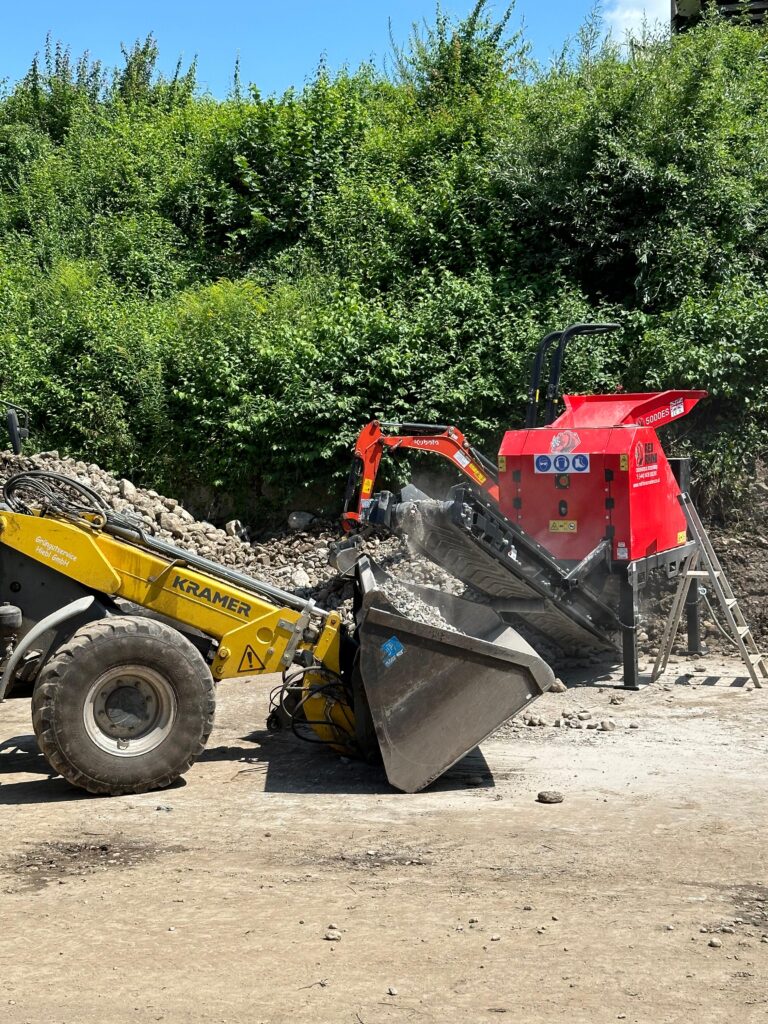
Choosing the right crusher can make or break a project. Whether you’re managing a large-scale demolition, running a recycling yard, or tackling groundwork on a restricted-access site, selecting the correct crusher type directly impacts your production efficiency, operational costs, and the quality of your final product.
This guide cuts through the noise and gives you a practical framework for making the right call for your project.
Understanding the different types of crushers
Before diving into specifications, it helps to understand the different types of crushers available and what each one is designed to do.
Jaw crushers
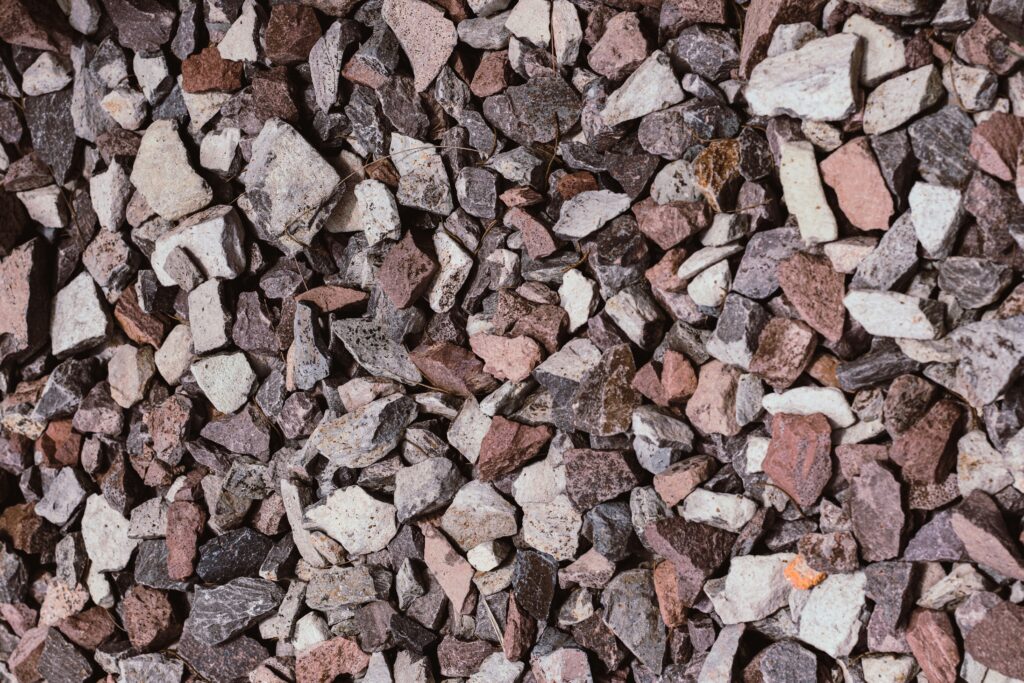
Jaw crushers are the workhorse of primary crushing. Using a fixed jaw and a moving jaw plate to compress material, they’re built to handle large materials including hard rocks, reinforced concrete, brick, and other abrasive materials. The crushing chamber accepts a wide feed size, making jaw crushers ideal as primary crushers in most construction, demolition, and aggregate production settings. Output sizes typically range from 30mm to 120mm depending on the machine and jaw setting.
Red Rhino’s range – from the compact RR 4000 through to the heavy-duty RR 8000 – is built entirely around jaw crusher technology, refined over decades of British engineering.
Impact crushers
Impact crushers use a spinning rotor fitted with blow bars to strike material at high velocity. They excel with softer materials and are commonly used in secondary crushing or tertiary crushing stages. Shaft impact crushers are particularly effective where precise particle size and shape matter, but, they wear more quickly with highly abrasive materials, which can push up maintenance costs over time.
Cone crushers
Cone crushers are typically deployed as a secondary crusher or in tertiary crushing roles. They work by compressing material between a fixed outer cone and a spinning inner cone. Well-suited to hard materials and hard rocks, cone crushers are a common feature in larger mining operations and quarry-based production lines. They’re less suited to mobile or site-based demolition work where a mobile crusher is needed.
Hammer crushers and roll crushers
Hammer crushers and roll crushers tend to be used for softer materials and specific applications within production lines. A roll crusher, for example, uses two counter-rotating rollers to reduce material size, while hammer crushers rely on impact force. These crusher types are less commonly specified for general construction and demolition but remain relevant in certain industrial and processing contexts.
Why choose a jaw crusher?
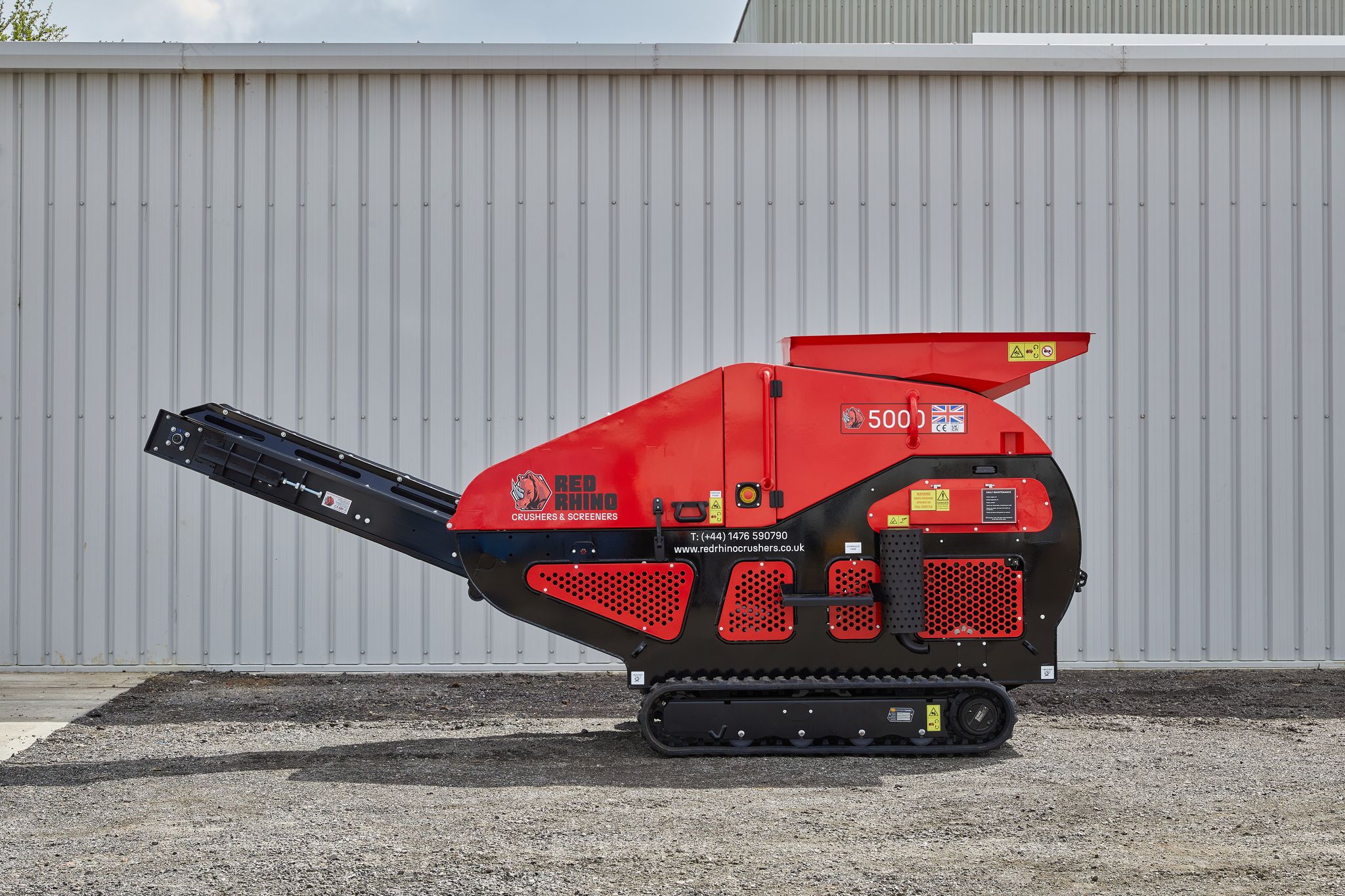
When it comes to construction, demolition, and recycling applications, a jaw crusher is the practical choice for most operators. Unlike cone crushers or impact crushers, which are better suited to secondary and tertiary crushing stages, a jaw crusher tackles the first stage of the crushing process head on — handling large, hard, and abrasive materials that other crusher types simply aren’t built for.
They’re robust, straightforward to operate, and deliver consistent output across a wide range of material types, from reinforced concrete and brick to hard rock and stone. For contractors and site managers who need a reliable, versatile machine that gets straight to work with minimal fuss, a jaw crusher is hard to beat.
Key factors in crusher selection
Knowing the different types of crushers is only part of the picture. Here are the key factors to assess before specifying a machine.
Material type and characteristics
The type of material you’re crushing should be your starting point. Hard rocks and reinforced concrete demand a robust jaw crusher with heavy-duty jaw plates. Moisture content also matters — wet, clay-rich material can clog certain crusher types, so understanding your feed material is essential before committing to a crusher type.
Feed size
Feed size refers to the maximum size of material the crusher can accept. Matching feed size to the crushing chamber is critical. Forcing oversized raw materials into a machine not designed for them causes unnecessary wear and downtime.
Required output sizes and reduction ratios
What does your final output need to look like? If you need flexible output across a range of sizes, a jaw crusher with hydraulically adjustable jaws gives you that control without stopping production. Reduction ratios vary between crusher types, so factor in whether you need a single-stage process or a multi-stage setup with a secondary crusher.
Production capacity and production needs
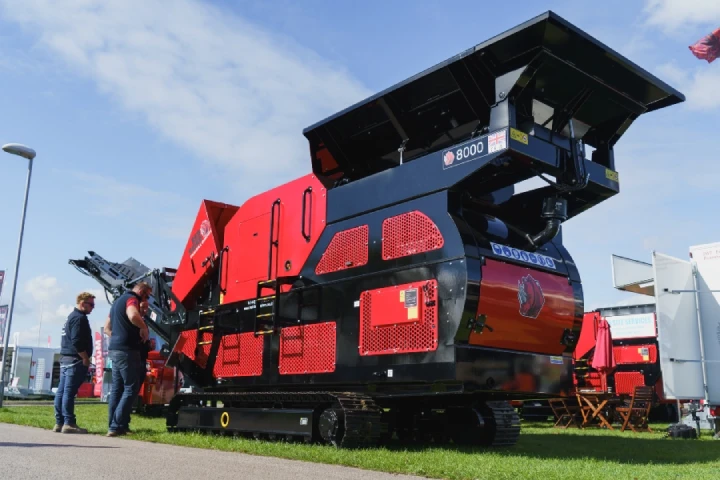
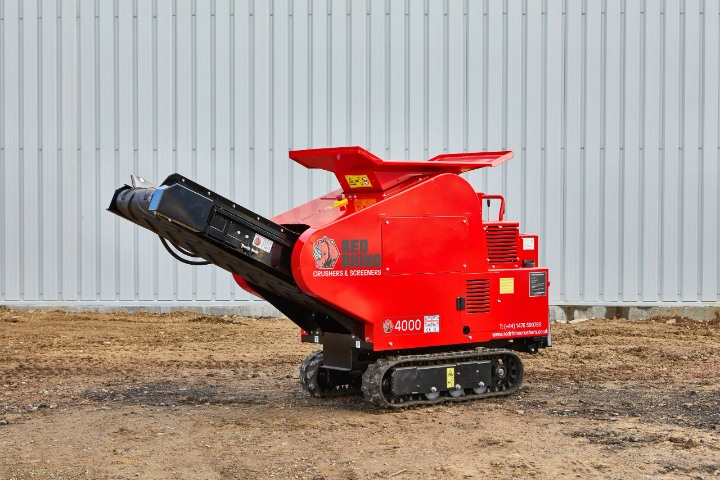
Match the machine to your production needs. A compact machine like the RR 4000 produces up to 6–8 tonnes per hour* – ideal for small size jobs and restricted-access sites. Step up to the RR 8000 and you’re looking at a machine engineered for quarry use and large demolition jobs with a much larger output.
*dependent on material and loading methods.
Mobile vs. static crusher
For contractors moving between sites, a mobile crusher with portable crushing capability is usually the right choice. Red Rhino’s mobile range is designed for fast setup and built for easy transport between sites. If you’re operating from a fixed location such as a recycling yard, a static crusher like the RR 7000ES offers consistent output.
Operational costs and maintenance costs
The best crushers aren’t always the most expensive — but cutting corners on build quality will cost you more in the long run. Consider the availability of spare parts, ease of access for routine servicing, and whether technical support is on hand when you need it. Red Rhino service engineers are available nationwide and can be on-site as quickly as possible.
Matching the machine to the project
Here’s a straightforward guide to help with crusher selection:
Small-scale crushing, restricted access, landscaping or garden projects → RR 4000 (passes through a standard doorway, 780mm wide)
Mid-range demolition, construction waste recycling → RR 5000 Plus (vibrating feeder, dust suppression as standard, 1665mm wide)
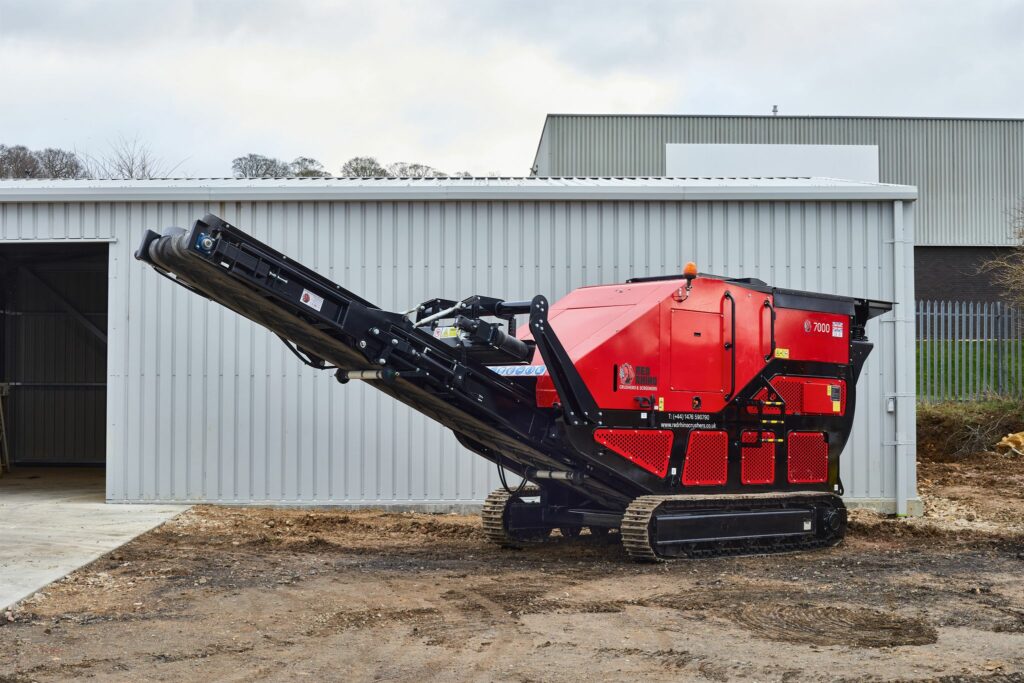
Large demolition, construction sites, recycling yards → RR 7000 (700mm x 400mm jaw, wireless remote control operation, optional magnet conveyor)
Quarry use, high-volume crushing, major demolition → RR 8000 (800mm x 500mm jaw, cast crusher box, loading sensor, overband magnet included as standard)
Fixed-location, high-volume recycling or demolition → RR 7000ES static crusher.
Don’t overlook the financial case
Beyond crusher selection, it’s worth considering the commercial impact. Owning the right crusher reduces or eliminates skip hire and disposal costs, allows you to sell crushed aggregate as a valuable commodity, and cuts your dependence on bought-in hardcore. For businesses managing regular demolition or construction waste, the return on investment is significant.
FAQs
What is the best crusher for demolition work on a construction site?
For most demolition applications, a jaw crusher is the right choice. It handles large materials, abrasive materials, and reinforced concrete effectively. Red Rhino’s RR 7000 and RR 8000 are among the best crushers available for this type of work, offering wireless remote control operation, adjustable output sizes, and robust build quality designed for heavy-duty use.
Is a mobile crusher better than a static crusher?
It depends entirely on your operation. A mobile crusher offers portable crushing across multiple sites, fast setup, and flexibility. A static crusher like the RR 7000ES or 5000ES suits fixed locations such as recycling yards where consistent, high-volume output is the priority and transport between sites isn’t required.
What ongoing costs should I factor in when choosing a crusher?
Key considerations include fuel or energy consumption, jaw plate wear and replacement frequency, ease of maintenance, and the availability of parts and technical support. Red Rhino machines are designed with straightforward access for maintenance – no specialist tools required – and are backed by a dedicated parts and service operation.
Get in touch with Red Rhino
Not sure which machine is right for your project? Our team is on hand to talk through your specific needs, help you match the right crusher to your requirements, and provide a free quote.
Contact us today: fill in our online contact form, call us on +44 (0) 1476 590790 or email info@redrhinocrushers.net .