Anyone working in construction, demolition, groundwork or recycling will know that a crusher machine is one of the most valuable pieces of kit on site. It turns waste rubble into usable aggregate, cuts landfill costs and speeds up projects. This guide covers what a crusher machine does, how the different types of crushers work, where they’re used, and what to think about before buying one.
How does a crusher machine work?
At its core, a crusher machine reduces hard materials into smaller, more manageable pieces through a process called size reduction. Material is fed into a crushing chamber where a moving piece of steel presses it against a stationary piece, breaking lumps of material down to a set product size. The gap between these two components determines the final product size, and adjusting it allows operators to control product sizing on the fly.
The main types of crushers
Not all crushers are built the same, and the type of crusher you need depends on the material, the required product shape, and where it sits within your crushing stages.
Jaw crusher
The jaw crusher is the standard choice for primary crushing. It’s usually the first stage in the crushing process, taking large lumps of material and reducing them to a workable material size. A moving jaw closes against a fixed plate, and replaceable manganese wear plates protect the machine when working with abrasive materials, helping to keep operational costs low.
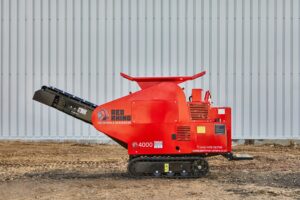
A mini crusher (like our RR 4000) machine is typically designed for smaller-scale jobs or confined spaces, handling reduced volumes and material sizes compared to a standard crusher. Mini crushers are more compact and portable, making them ideal for projects where the use of a standard jaw crusher would be impractical.
Cone crusher
A cone crusher is typically used for secondary crushing or tertiary crushing. Material moves down through a tall crushing chamber, where an adjustable main shaft rotates against stationary concave liners near the top of the cone crusher. As the gap closes, material is compressed into smaller pieces. A series cone crusher gives good control over product sizing, though it generally offers lower throughput than primary crushers, and tends to produce more cubical product for construction aggregates.
Impact crusher
There are two common types of impact crushers: horizontal shaft impact and vertical shaft impact. Both use a spinning rotor fitted with blow bars, which strike material against breaker plates inside the crushing chamber. This creates a strong crushing action that delivers a finer output, and is often chosen when cubical aggregates and a refined product shape matter, such as for high-spec construction aggregates.
Gyratory crusher
Gyratory crushers are heavy-duty machines used mainly in mining operations and large quarries. As one of the classic types of primary crushers, they’re built to handle a huge range of materials and high volumes of hard rock at the primary crushing stage.
Roll crushers
Double roll crushers use two rotating rollers, ideal for soft rock and materials where good gradation control is needed. Their compact design also makes them a practical option where space on site is limited.
Primary, secondary and tertiary crushing stages
Most operations rely on a sequence of crushing stages to get from raw material to finished product. The primary crushing stage handles the initial breakdown of hard materials, reducing large lumps to a size that can be processed further. Secondary crushers then refine this further, and tertiary crushers, sometimes followed by quaternary crushers, fine-tune the final product size and shape. The reduction ratio achieved at each stage determines how many passes material needs before it’s ready for use. Understanding this helps you pick the right crusher, or right combination of crushers, for the job.
Where are crusher machines used?
Crusher machines are used across a wide range of industrial applications, including:
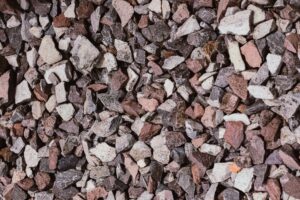
- Demolition and construction sites, turning rubble into reusable hardcore
- Groundwork and landscaping, producing aggregate without buying it in
- Skip hire and recycling yards, processing mixed waste on-site
- Quarrying and mining operations, where high-volume primary crushers deal with hard rock daily
- Plant hire businesses supplying machinery to contractors across a range of materials
What to check before buying a crusher machine
Before you invest, consider the following:
- Mobile versus static: Mobile crushers offer flexibility across multiple sites, whereas static machines suit fixed quarry or recycling setups.
- Output and product size: Match the machine’s product sizing range to what your projects actually need.
- Access and compact design: Tighter sites may need a smaller footprint, such as a machine that can pass through a standard doorway.
- Material type: Confirm the crusher can cope with the abrasive materials and hard rock you’ll be feeding it.
- Wear parts: Replaceable manganese wear plates reduce downtime and keep operational costs under control.
- Aftercare: A manufacturer offering nationwide service support means less time waiting around when something needs attention.
Red Rhino’s crusher machine range
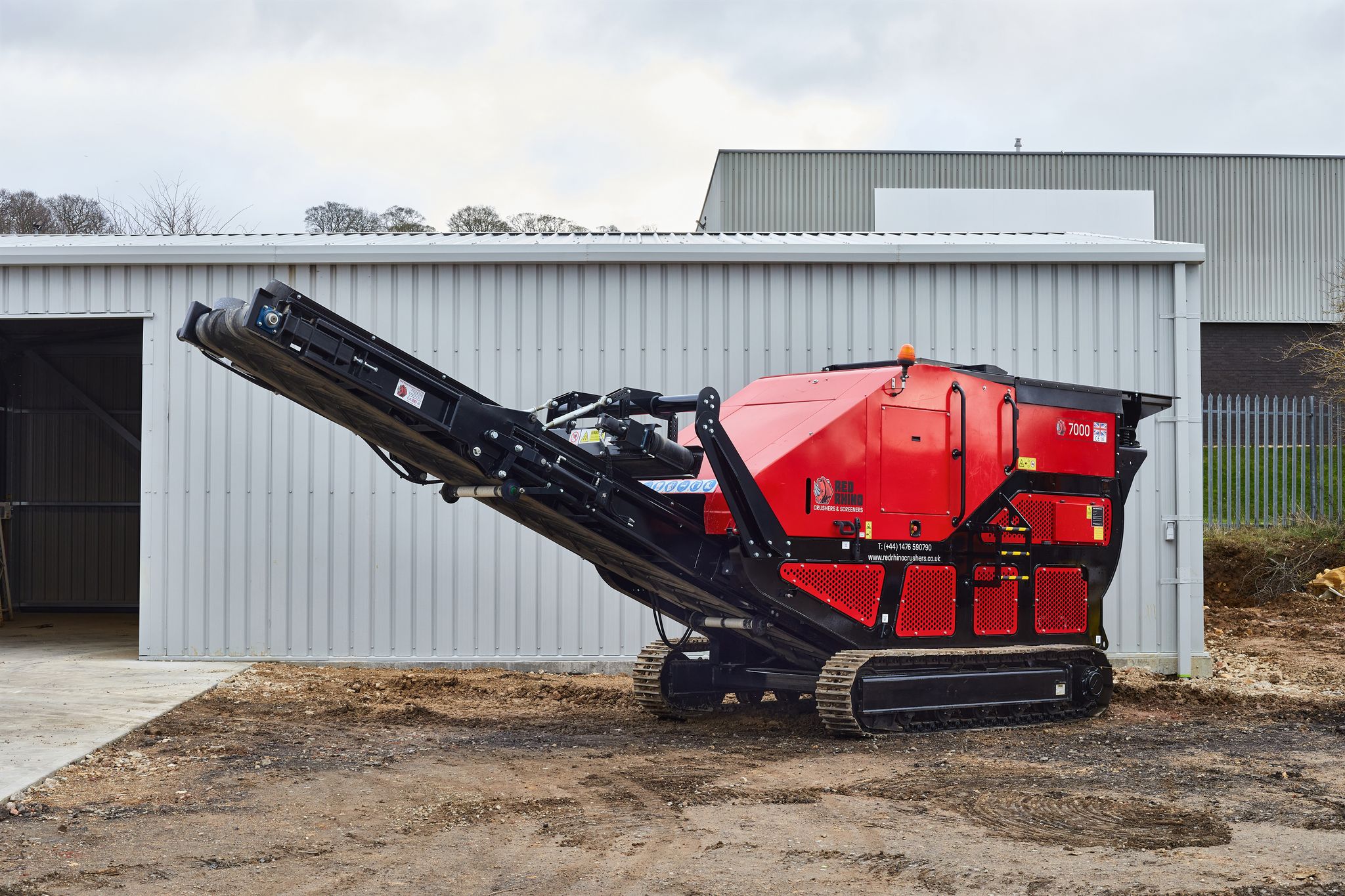
Red Rhino builds a complete range of jaw crushers designed and manufactured in Grantham, Lincolnshire.
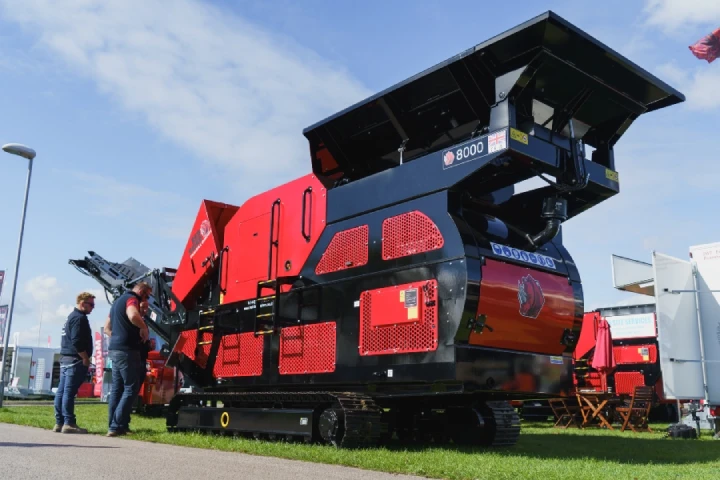
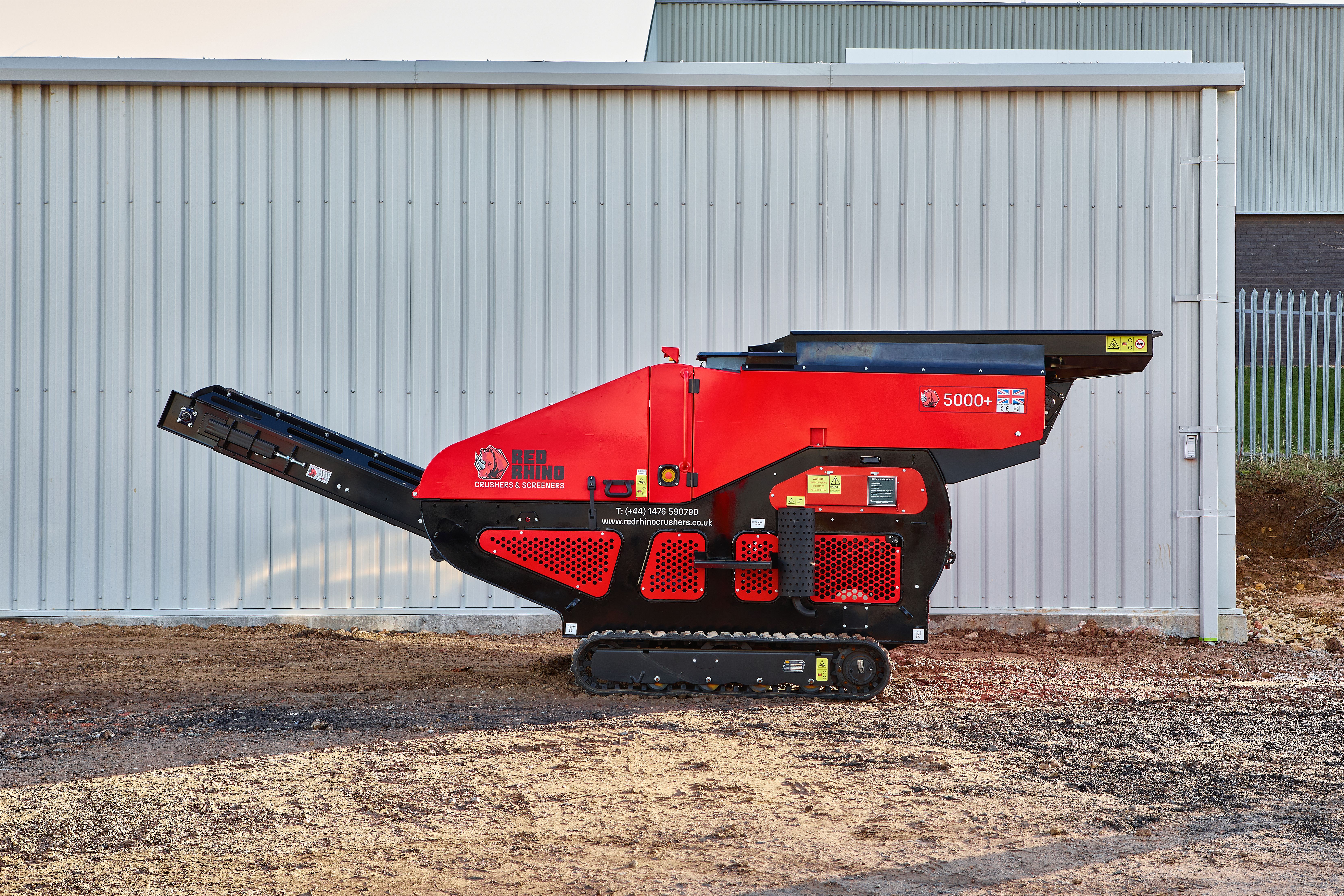
From the compact RR 4000 & RR 5000+, suited to small sites and restricted access, through to the RR 7000 and RR 8000 for demolition and quarry-scale projects, there’s a machine for every scale of operation.
Every crusher features hydraulic adjustable jaws, wireless remote control and durable wear plates built to handle abrasive materials day after day. Our crushers work across the UK and have been exported to countries including the USA, Canada, Australia, Germany, Japan, Poland and Slovakia, with growing interest from Southeast Asia and the Middle East.
Hiring versus buying: what’s right for your business?
Hiring a crusher machine can make sense for a single short-term job, particularly if you’re testing whether crushing on-site suits your operation. However, for businesses that regularly generate waste material, whether that’s demolition rubble, groundwork spoil or recycling yard stock, ownership tends to be far more cost-effective over time.
Other things to think about before you buy
Beyond the hire-or-buy decision, it’s worth thinking about total cost of ownership rather than just the purchase price. Factor in fuel or power consumption, servicing requirements, and the availability of replacement wear parts such as manganese liners and breaker plates, as these will all affect your operational costs over the life of the machine.
It’s also worth checking lead times if you need a crusher machine quickly, as well as whether the manufacturer offers UK-based support, since a fault on-site with no local engineer can cause serious delays.
This is an area where Red Rhino stands apart.
Red Rhino’s spare parts service
We run a comprehensive spare parts service, with wear plates, jaw components and other parts held in stock and ready to despatch, so machines aren’t left standing idle waiting for replacements.
Our aftercare doesn’t stop once the sale is made. We’re focused on building long-term relationships with our customers, not just one-off transactions, so you’ll always have support on hand for the lifetime of your crusher.
Frequently asked questions
What is the best crusher machine for concrete?
A jaw crusher is the go-to concrete crusher for reinforced concrete, brick and general demolition rubble. It handles hard materials well at the primary crushing stage and produces a consistent product size suitable for reuse as hardcore.
Is it better to buy or hire a crusher machine?
If you generate waste material regularly, buying usually works out more cost-effective over time, avoiding repeated hire fees and third-party waste collection. Hiring can suit a single short-term project, but ongoing operational costs often favour ownership.
What affects crusher machine output?
Output is shaped by jaw aperture, feeder speed, material size, the type of crusher being used, and the reduction ratio applied. Harder, more abrasive materials generally mean lower throughput than softer materials.
Find the perfect crusher for your project: speak to Red Rhino today
If you’re ready to find the right crusher for your business, or just want advice on which model suits your projects, get in touch with our team today for a free quote.
- Fill in our online contact form
- Call us on +44 (0) 1476 590790
- Email info@redrhinocrushers.net