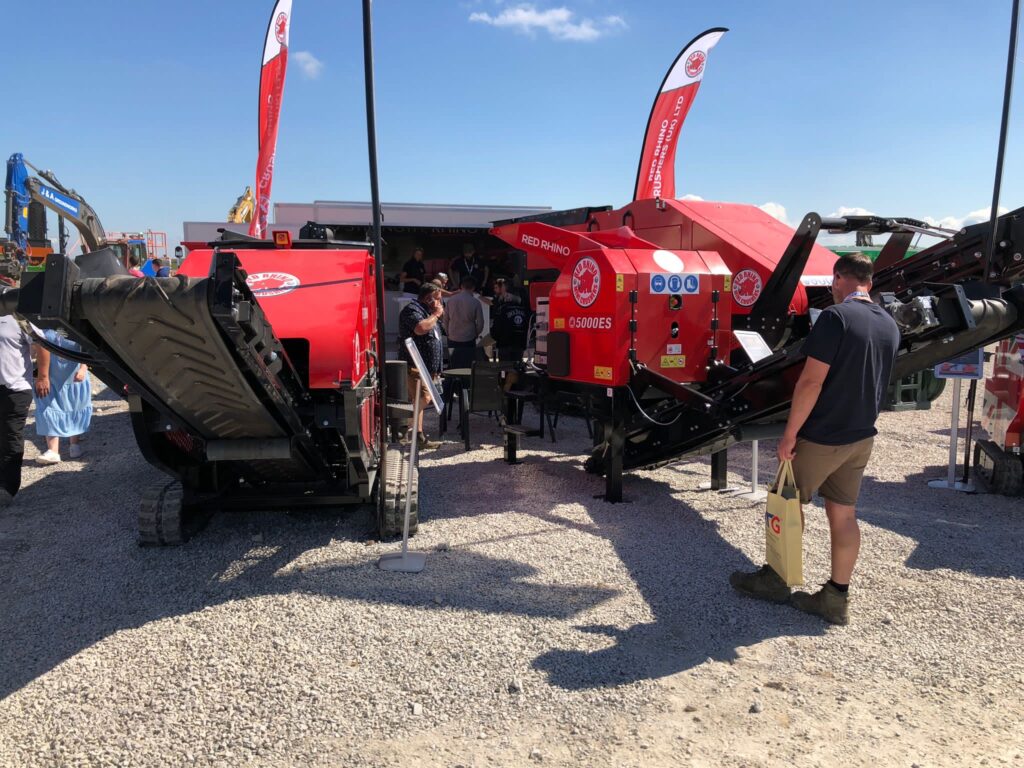
Choosing the right crusher is essential for efficient material processing, whether you work in construction, demolition, groundwork, skip hire or recycling.
With so many types of crushers available, understanding the differences helps you select a machine that is up to the task of handling your feed material, and produces the finished product your job requires.
This guide explains the main types of crushers, how they work, and where each type is best used.
Types of crushers
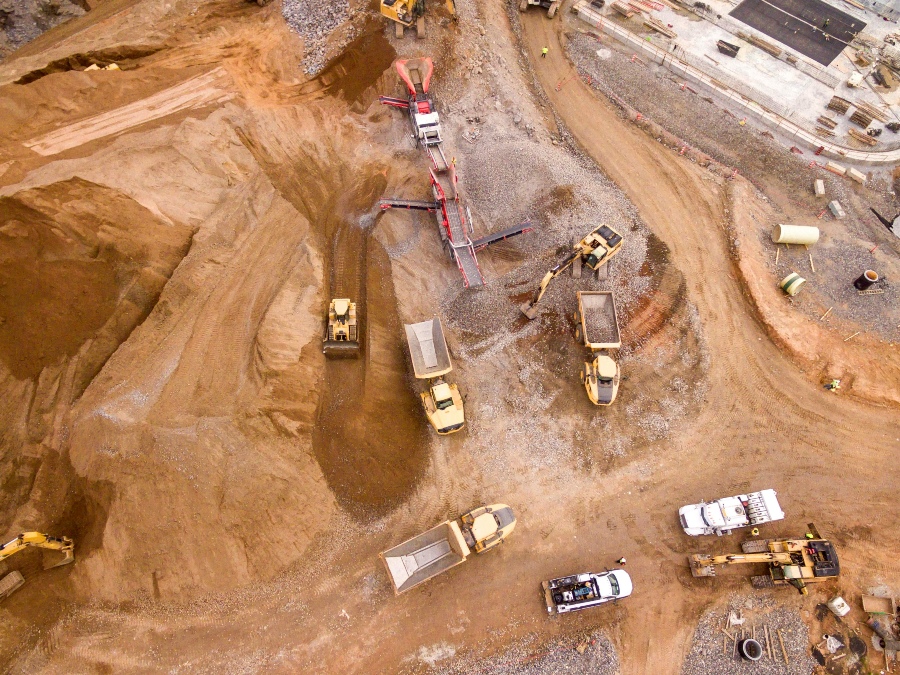
Crushers are used to break down large rocks, concrete and other raw material into smaller pieces so they can be reused, processed further, or transported off site. In aggregate production and wider material processing, there are several different types of crushing equipments, each suited to a specific crushing process or stage, including:
- Jaw crushers – ideal for primary crushing of hard materials and large pieces
- Impact crushers (horizontal shaft impact and vertical shaft impact) – suitable for softer materials and applications where particle shape matters
- Cone crushers – used for secondary crushing to produce finer materials, producing consistent material size and shape
- Mini crushers – compact and manoeuvrable, ideal for small sites and restricted access
Each crusher type uses a different method for size reduction, from compressive force to high-speed impact. Understanding these differences ensures you choose a machine suited to the feed size, output needs and environmental conditions of your project.
What are jaw crushers?
Jaw crushers are the most widely used types of primary crushers, designed to handle large rocks, concrete and abrasive materials. Incredibly versatile and suitable for various sectors and project types, they work using a simple and dependable mechanism: a fixed jaw and a moving jaw powered by an eccentric shaft compress the feed material until it breaks into manageable sizes.
The material enters the crushing chamber through the feed opening. As the moving jaw advances towards the fixed jaw, the material is crushed and reduced to the required product size before being discharged as crushed material.
Jaw crushers handle hard materials with ease, making them a dependable choice across the construction and mining industry.
The advantages of jaw crushers
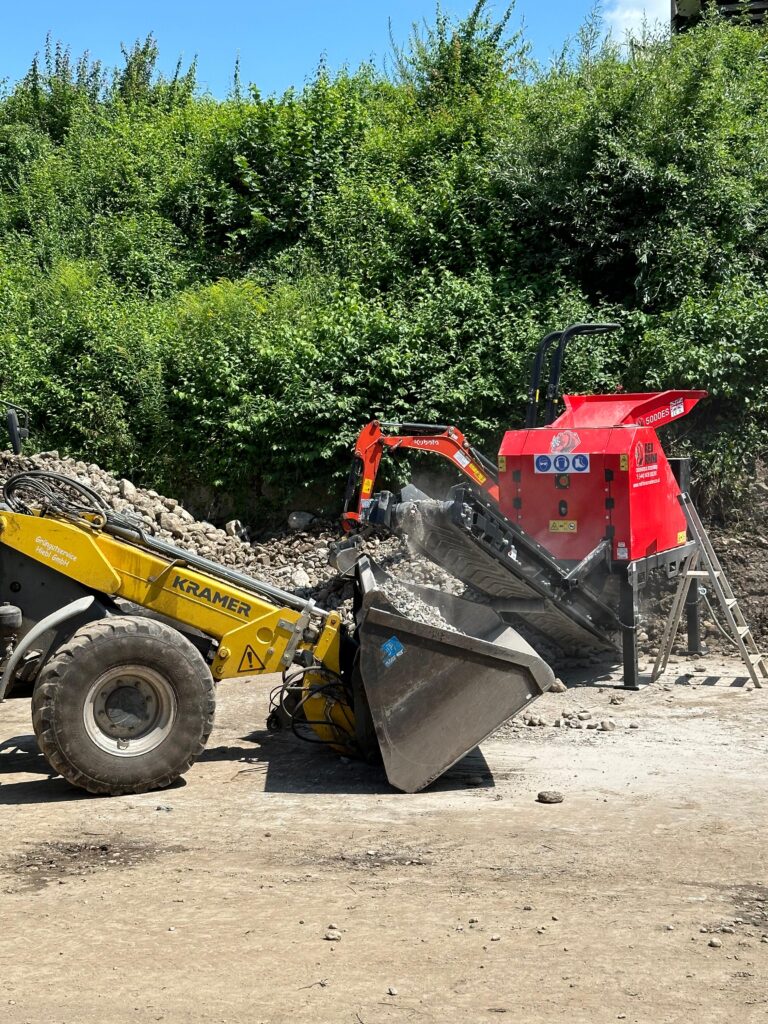
Jaw crushers are popular across material processing for several reasons:
- Ideal for primary crushing
Jaw crushers excel at the first stage of the crushing process, taking oversized material and breaking it down into smaller pieces suitable for secondary crushing if required.
- Highly reliable with hard materials
Their robust design makes them suitable for tough, abrasive materials, hard rocks and construction waste that would quickly wear out other crusher types.
- Consistent product size
By adjusting the side setting, you control the particle size of the finished product, making the crusher suitable for various sizes and applications.
- Low maintenance and easy operation
With fewer internal components than cone or impact crushers, jaw crushers offer straightforward servicing and dependability.
- Effective with mixed waste materials
Ideal for demolition work, where feed material can include concrete with rebar, bricks, blocks and other waste materials.
What type of crusher is best for primary crushing?
For primary crushing, a jaw crusher is often the best choice. Its design allows it to handle large materials effectively, breaking them down into manageable sizes. Additionally, jaw crushers are known for their durability and versatility, making them ideal for various applications in mining and construction industries.
Red Rhino’s range of jaw crushers
Red Rhino manufactures an extensive range of British-built jaw crushers, all designed and assembled in our Lincolnshire facilities. Each model is built to deliver reliable size reduction, easy transport between sites, and long-term durability.
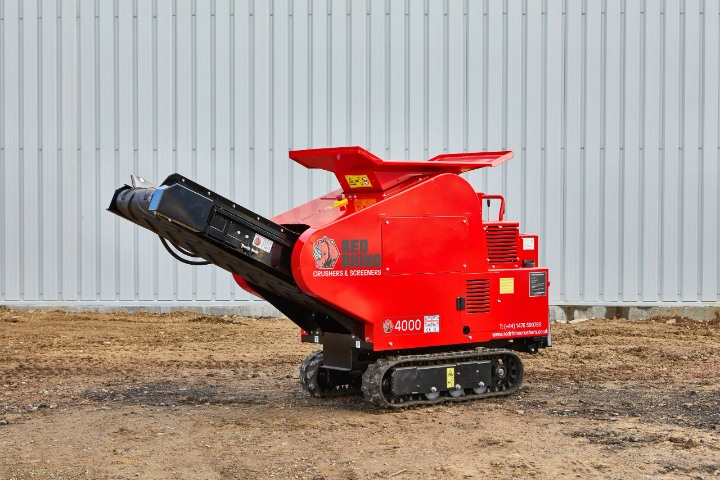
RR 4000 – compact mini crusher
A compact mini crusher, built for restricted access, residential work and small to medium projects.
Jaw aperture: 400mm x 170mm
Output: Up to 6–8 tonnes per hour
Ideal for landscaping, small demolition and projects requiring a portable concrete crusher.
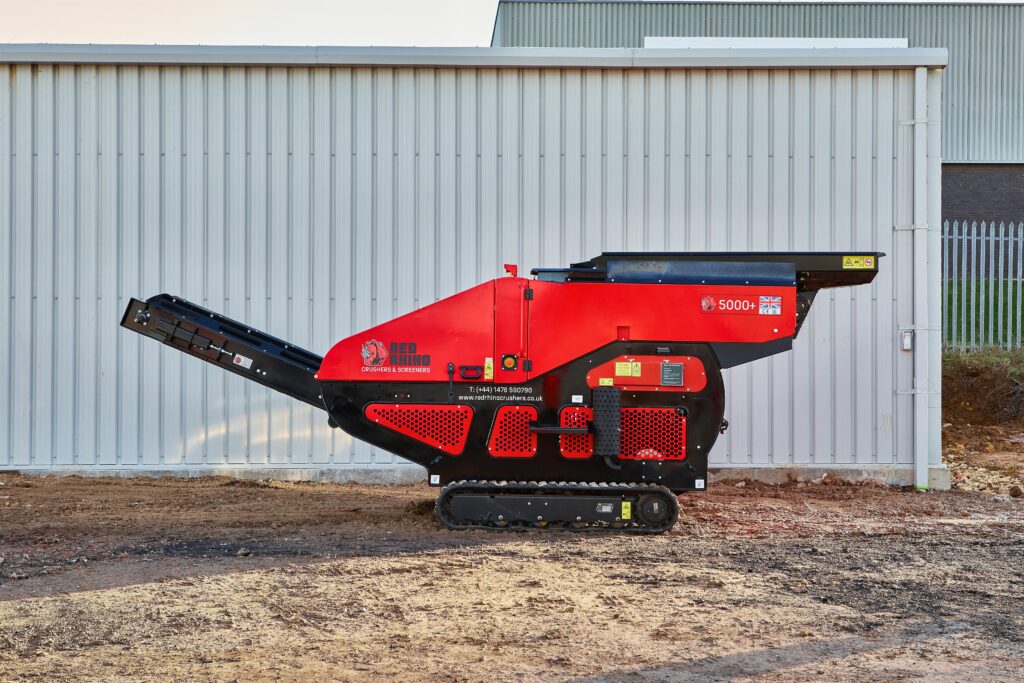
RR 5000+ – versatile mid-range crusher
One of our most popular models, suited to the widest range of applications.
Jaw aperture: 500mm x 250mm
Output: Up to 20 tonnes per hour
Upgraded jaw dynamics improve throughput and reduce downtime.
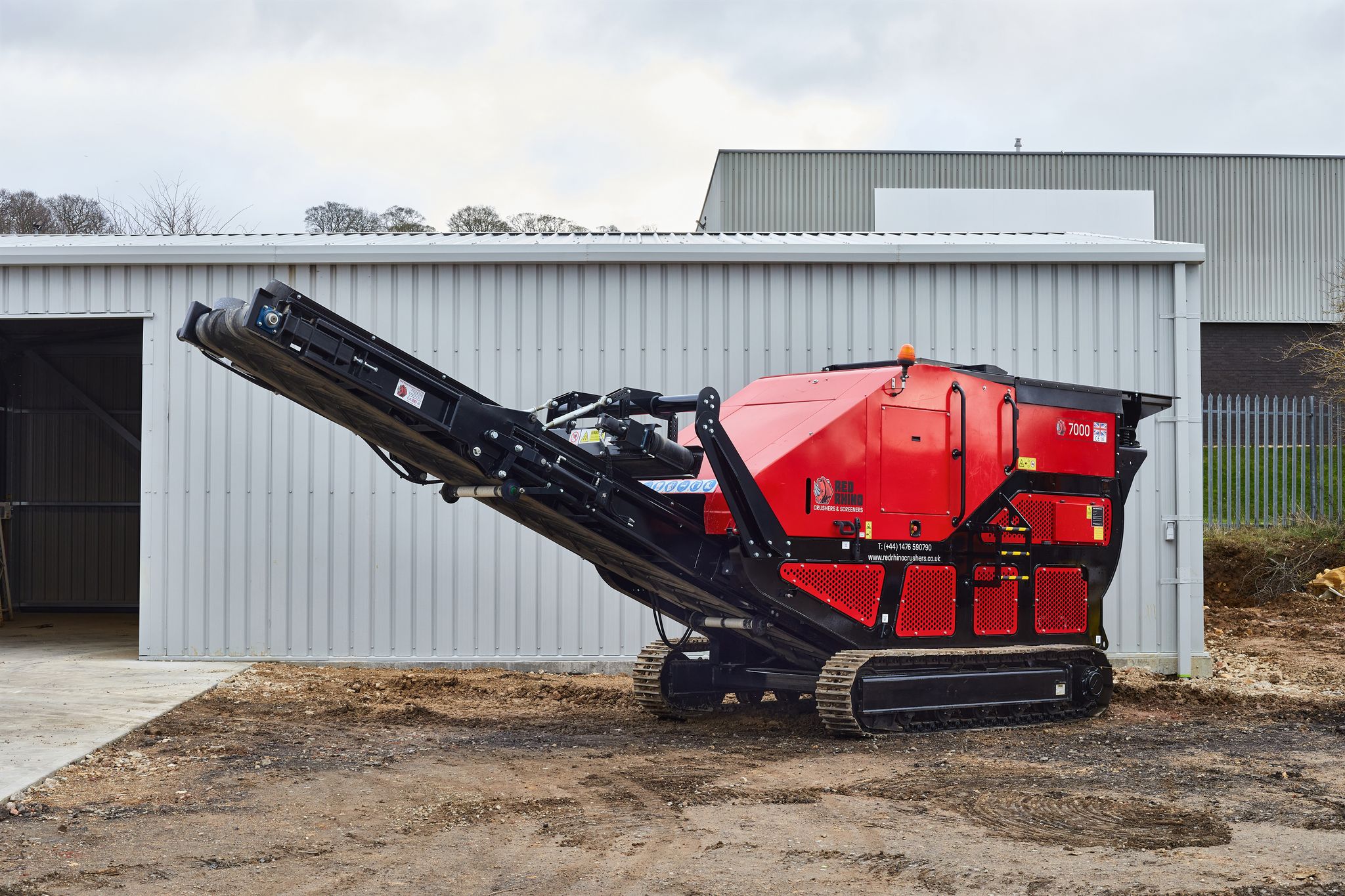
RR 7000 – high-capacity crusher for large sites
Perfect for contractors needing large-scale throughput.
Jaw aperture: 700mm x 400mm
Output: Up to 45 tonnes per hour
Optional magnet for separating steel, ideal for demolition firms and recycling yards.
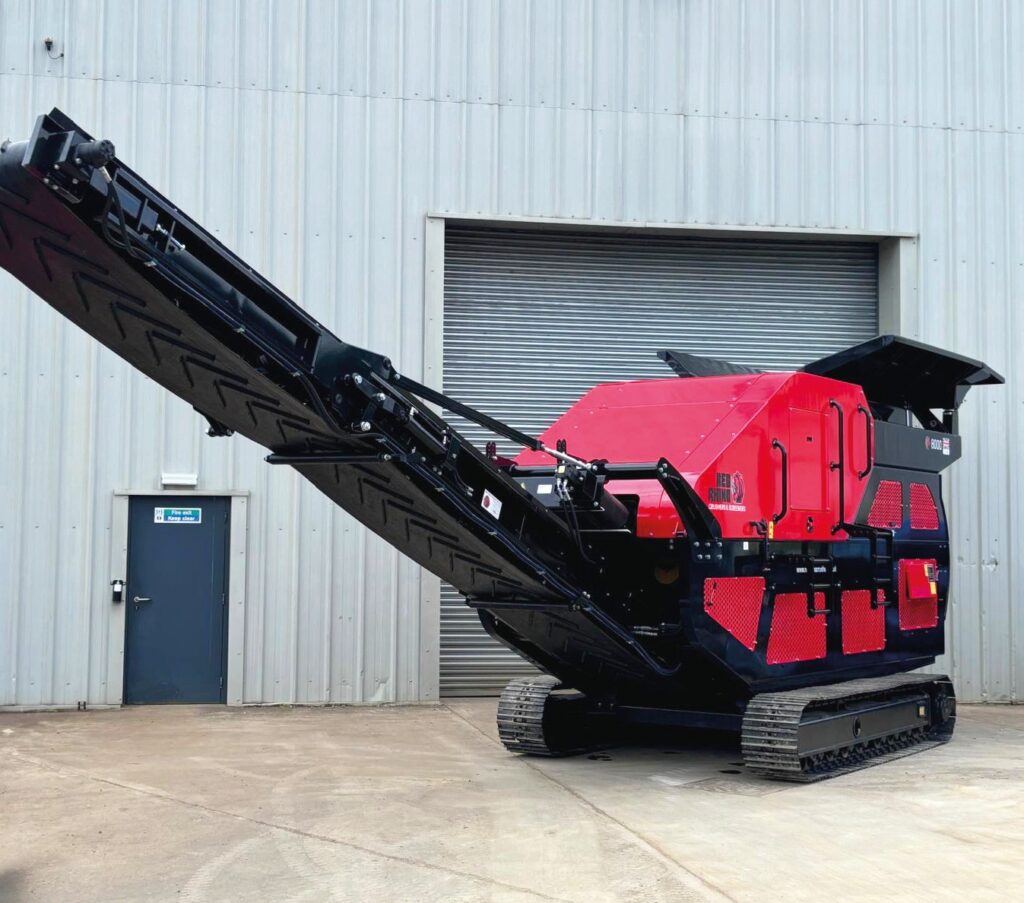
RR 8000 – heavy-duty primary crusher
The strongest Red Rhino model, designed for demanding quarry and demolition environments.
Jaw aperture: 800mm x 500mm
Output: up to 100 tonnes per hour
Our newest and most powerful jaw crusher yet, the RR 8000 features a 1300mm deep crushing chamber, foldable grizzly feeder and full remote control. Unlike fabricated alternatives, the crusher box for our RR 8000 is fully cast — including the back body, moving jaw, and front beam — offering strength and durability.
How to choose the best jaw crusher for your job
When selecting the right type of crusher or specific Red Rhino model, consider:
- Feed size and raw material – Identify the largest material size that will be entering the crusher to ensure the feed opening will be suitable
- Required output and reduction ratio – If you need high volume or smaller particle size, consider a larger model with a deeper chamber for continuous flow.
- Type of material – Hard concrete and abrasive materials require a robust jaw crusher.
- Space and access – Tight or urban sites benefit from compact or mini crushers like the 4000, while large developments or recycling yards suit the 7000 or 8000.
- Mobility requirements – All Red Rhino crushers are built for easy transport, but smaller machines offer better manoeuvrability between projects.
What are the most common types of crushers?
The main types include jaw crushers, cone crushers, impact crushers, roll crushers and mini crushers. Each is suited to different stages of the crushing process.
Which type of crusher is best for primary crushing?
A jaw crusher is the most effective primary crusher for breaking down hard materials and large rocks.
Which Red Rhino crusher is best for concrete?
All Red Rhino jaw crushers can process concrete, but the model you need depends on material volume and site access. The 4000 suits small sites, while the 7000 and 8000 handle heavy-duty concrete crushing.
Find a jaw crusher to hire or purchase: contact Red Rhino today
Red Rhino manufactures British-built crushers designed for the realities of construction, demolition and recycling. If you want expert guidance or a free, no-obligation quote, get in touch today.
Complete our online contact form, or email info@redrhinocrushers.net . You can also use our Hire Locator to find Red Rhino machines for hire near you.